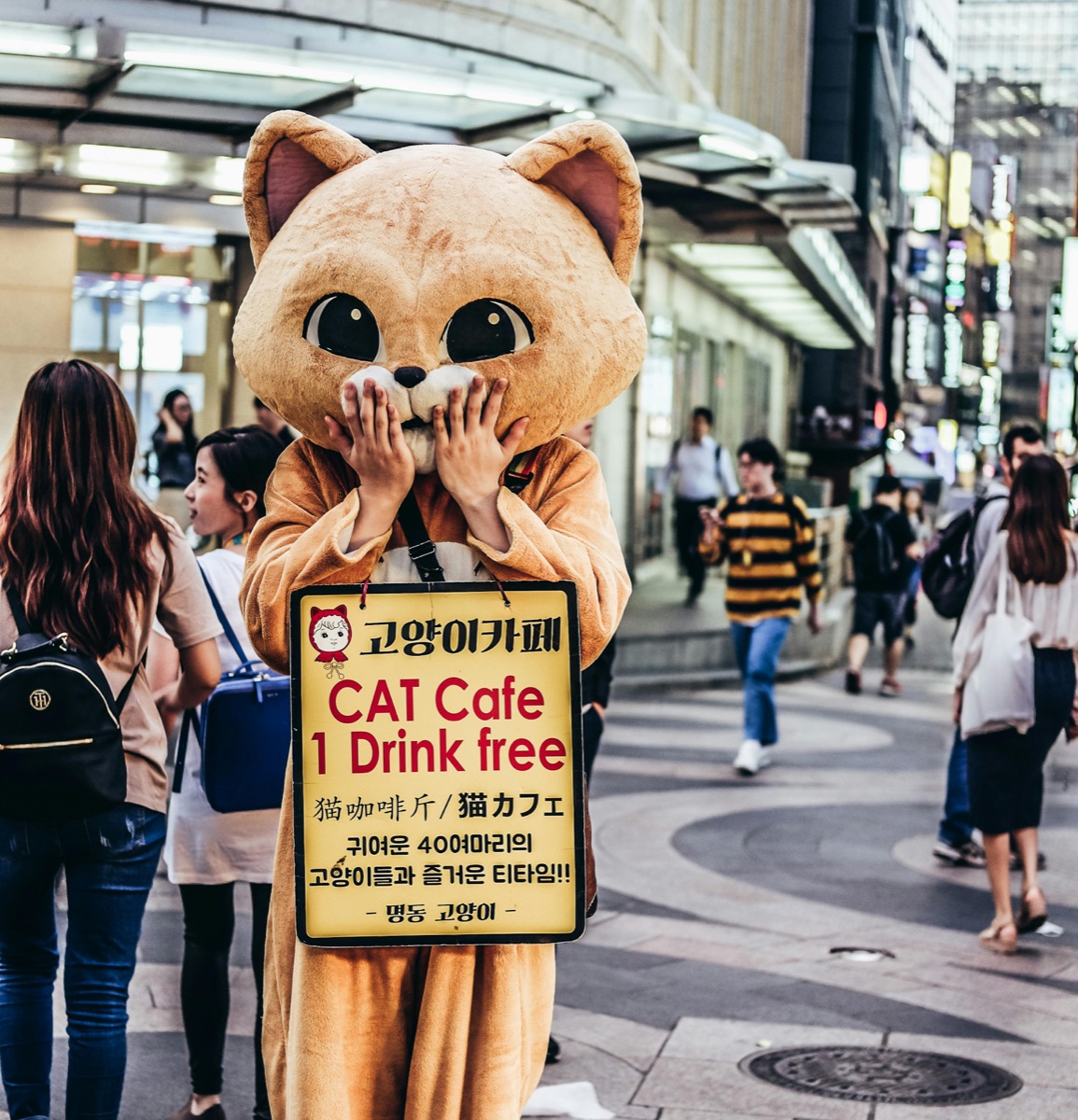
Somewhere in your K-content journey you’ve seen it: a 25-year-old idol puffs their cheeks, makes fists under their chin, and squeaks “bbuing bbuing~” — and the audience loses it. That’s 애교 (aegyo), Korea’s institutionalized cuteness, and it’s a far deeper cultural phenomenon than fan service.
What Aegyo Actually Is
애교 is deliberate, performed cuteness — a register of behavior you switch into: voice pitched up, vowels stretched, expressions exaggerated, gestures miniaturized. The word itself is old (from hanja 愛嬌, “lovable charm”), and the concept predates K-pop by generations.
The crucial part English speakers miss: aegyo is a social skill, not (only) a performance. Koreans use it to:
- soften a request (asking a favor with 응~? attached)
- defuse tension after a small mistake
- express affection without heavy words
- play the expected role of youngest in a group
Think of it as emotional seasoning — measured by the situation, and judged harshly when over-poured.
The Classic Aegyo Toolkit
Sounds & speech patterns
| Aegyo | Normal Korean | Meaning |
|---|---|---|
| 오빠야~ (oppaya~) | 오빠 | stretched “oppa” (the word itself) |
| 잉~ / 응~ (ing~/eung~) | — | whiny “pleeease” noise |
| 뿌잉뿌잉 (bbuing bbuing) | — | THE aegyo sound, with cheek-fists gesture |
| 배고파용~ (baegopayong~) | 배고파요 | ”I’m hungryyy” — 요 becomes cutesy 용 |
| 맛있당! (masittang!) | 맛있다 | ”yummy!” — adding ㅇ to endings |
| 시러! (sireo!) | 싫어 | baby-spelled “don’t wanna!” |
That last row shows a whole genre: cute misspellings. Adding ㅇ batchim (해용, 좋아용), doubling vowels, or baby-phonology respellings (시러 for 싫어) — Korean texting is full of it. (Related: Korean texting slang — aegyo spelling is its sugary dialect.)
Gestures
- Bbuing bbuing: fists rotating at cheeks
- Finger hearts (손하트): thumb + index cross — Korea’s most successful cultural export after kimchi
- Cheek poke: pointing at your own dimple
- The gwiyomi count: numbers 1–6 with escalating cute gestures — the viral 귀요미 송 formula
Aegyo in K-pop: The Maknae Tax
In idol groups, aegyo is nearly a job requirement, and it’s distributed by role: the maknae (막내, youngest member) carries the heaviest aegyo duty, while a designated “aegyo prince/princess” handles variety-show demands. The ritual is standardized: an MC says 애교 한번 보여주세요 (“show us some aegyo”), the member cringes, the members scream, the clip gets 10M views.
Male idol aegyo is arguably more celebrated than female — the contrast (tough concept ↔ bbuing bbuing) is the whole entertainment engine.
Real-Life Aegyo: The Calibration Game
Yes, real Koreans do it — the question is dosage:
| Context | Aegyo level |
|---|---|
| To your partner | high — practically expected in early relationships |
| Youngest at a friend dinner, angling for the last chicken | medium, played for laughs |
| Asking your 언니 to lend you something | light — one stretched vowel |
| At work, to your boss | ~zero (weaponized aegyo exists but is a high-risk move) |
| First date | trace amounts; overdoing it is a documented turn-off |
When aegyo overshoots, Koreans have the perfect word: 오글거리다 (ogeul-georida) — the full-body cringe that makes your toes curl. The fine line between 귀여워 (cute!) and 오글거려 (cringe!) is aegyo mastery.
The Vocabulary Cluster
| Korean | Romanization | Meaning |
|---|---|---|
| 애교 | aegyo | performed cuteness |
| 귀엽다 / 귀여워 | gwiyeopda / gwiyeowo | to be cute / “cute!” |
| 귀요미 | gwiyomi | cutie |
| 심쿵 | simkung | heart-thump (cuteness attack) |
| 애교 부리다 | aegyo burida | to deploy aegyo |
| 오글거리다 | ogeul-georida | to be cringe-inducing |
Watch for 애교 부리지 마 (“stop with the aegyo”) in K-dramas — always said while visibly melting.
Why This Word Repays Study
Aegyo vocabulary is high-frequency in exactly the content learners consume: variety shows, idol lives, K-drama flirting scenes. And the cute-misspelling genre (해용, 마니마니, 시러) is genuinely useful reading training — you only recognize a bent spelling instantly if the straight one is automatic. That’s reading fluency doing its quiet work.
More K-culture decoding: what saja means (KPop Demon Hunters), noona/hyung/unnie, and the learning-through-culture guide. And to read 뿌잉뿌잉 as fast as the idol says it — Batchim, 15 minutes a day. 뿌잉뿌잉~